What is Voice of the Customer? Process + Full Guide in 2026



Friday, April 3, 2026


What is Voice of the Customer? Process + Full Guide in 2026


View the podcast on Youtube

Customers aren't shy about voicing their preferences, frustrations, and ideas. Despite that feedback being one of the most valuable resources at their disposal, a surprising number of companies still overlook it (or fail to use it to its fullest potential).
Voice of the Customer (VoC) is the systematic process of collecting, analyzing, and acting on what customers say and do, across surveys, reviews, support conversations, and interviews, so teams can turn that input into decisions instead of letting it sit in a dashboard. It's proactive, not reactive, and it now feeds more than internal roadmaps. Buyers ask ChatGPT and Perplexity to compare vendors before they ever talk to sales, and those answers get built from the same customer voice a well-run VoC program collects.
A 2023 survey from Treasure Data found that 76% of business leaders were confident they understood their customers well enough to deliver personalized experiences. Only 25% of consumers agreed. That gap hasn't closed. More than half of consumers say they'd switch to a competitor after just one bad experience.
The best way to close that gap? Listen to the people actually living the experience. That's what a Voice of the Customer strategy is built to do.
What is the Voice of the Customer (VOC)?
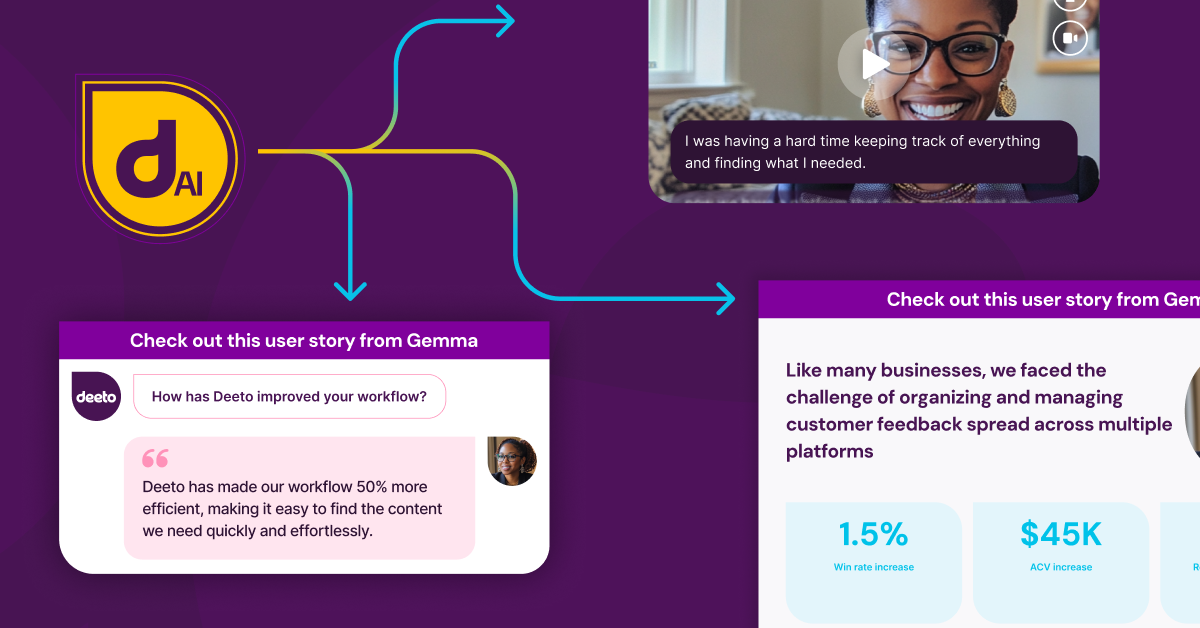
The Voice of the Customer encompasses everything your customers are saying about your business: what they love, what frustrates them, what they wish you'd change. It's the systematic process of gathering, analyzing, and acting on customer insights to improve their experience and, ultimately, your bottom line.
Think of it like running a restaurant. VoC isn't just reading Yelp reviews. You'd want to know what people order most, how long they wait, what they expect, and whether they'd recommend the place to a friend. Then you'd use that information to improve the menu, service times, and the overall experience.
Voice of the Customer vs. customer satisfaction
Customer satisfaction is a piece of VoC, not the whole picture.
VoC is proactive and holistic. It gathers insight on behavior, pain points, and expectations from multiple sources over time. Customer satisfaction is a snapshot, usually measured right after a purchase or support interaction, through metrics like CSAT or NPS. Those are reactive and touchpoint-specific.
Customer satisfaction tells you how someone felt in one moment. VoC tells you why, and what to do about it.
The role of active listening in VoC
Collecting VoC data to tick a box doesn't tell you much about the "why" behind it. Active listening means really tuning in to what your customers are saying (and how they’re saying it).
- Direct conversations with open-ended questions
- Support ticket trends and analysis
- Online reviews and ratings
- Social media mentions
Instead of just looking at the numbers and scores for these things, paying attention to the sentiment and language customers use gives you more context as to the emotions, motivations, and unspoken needs behind their words.
Why VoC matters for your business
VoC is a strategic lever, not a research exercise. It directly impacts growth and profitability by guiding customer-led decisions, helping you anticipate needs before they become churn risks.
Driving product development with customer insights
Your customers are the ones who use your products every day. That means they’re the first to spot what works, what doesn’t, and what’s missing. They can point out gaps or suggest features you may not have considered internally.
When customers repeatedly ask for the same thing or struggle with a similar issue, that’s your cue to act. Feeding this insight back into your product roadmap ensures you’re building things people actually want, which eliminates wasted dev time and increases adoption.
Enhancing the customer experience and increasing loyalty
Product differences alone don't hold customers anymore. Relationship quality does. Voice of the customer research from Salesforce found nearly three in four customers would switch brands for a better deal, while 88% said good service makes them more likely to purchase again.
VoC surfaces friction in the customer journey before it becomes a dealbreaker. Clunky onboarding, slow support, a confusing upgrade path. When you consistently gather and respond to feedback, retention and referrals follow.
Improving sales and marketing effectiveness
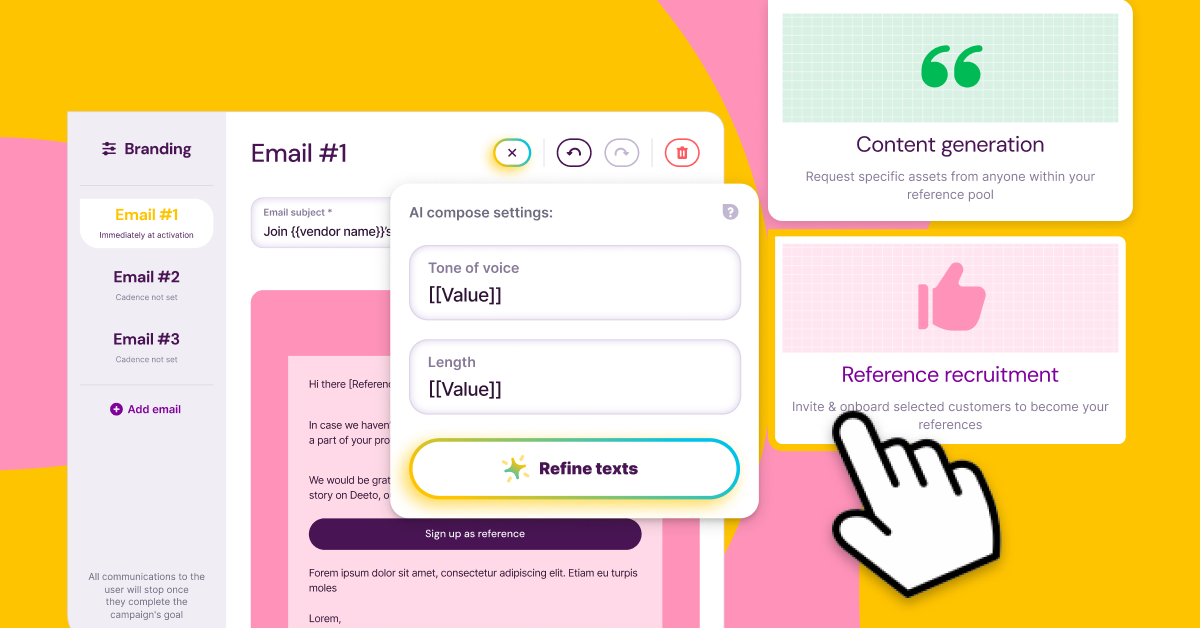
When you understand how customers actually talk about your product, it's easier to mirror that language in your messaging. That means sharper positioning, better copy, and campaigns that use the words real buyers use instead of the words marketing assumes they use.
Sales teams benefit too. VoC intelligence helps reps handle objections with real customer language instead of guesswork, and turns feedback into proof they can bring into a deal instead of a generic case study PDF.
Identifying opportunities for sales and product innovation
Sometimes, your customers will reveal use cases or needs you didn’t realize your product could solve. These are golden opportunities — not just for new features, but possibly new offerings, markets, and competitive positioning.
In your VoC data, look for those outlier comments or recurring “It would be great if…” moments. Those point to areas where you can create add-ons, premium tiers, cross-sells, or spin-off solutions that align with your customers’ evolving needs.
Reducing churn through proactive engagement
By the time a customer cancels, it's usually too late. But the warning signs, frustration, complaints, waning engagement, show up earlier if you're actually listening. A well-timed check-in call or product tutorial, triggered by churn risk signals, can turn a quiet dropout into a saved account.
Building a robust VoC program
To lay the groundwork for a successful strategy, there are four important steps you need to take when setting up your VoC program:
1. Set clear objectives and goals for your VoC program.
You need to know what you’re listening for. Otherwise, you’ll end up with a bunch of data and no clear direction. Goals give your VoC program purpose.
Start by asking: What are we trying to improve? Are you trying to reduce churn? Improve a product feature? Nail your brand messaging?
Once you have clarity, define measurable goals (like improving CSAT by 10% or increasing trial-to-paid conversion). These goals guide everything else, from what questions you ask to which channels you focus on.
2. Identify your key customer segments and personas.
Not all feedback carries the same weight, and different customers have different needs. To understand who you’re hearing from and make sure you’re acting on insights that actually matter to your business strategy, your second step is to segment your audience.
- New users vs. loyal customers
- High-LTV clients vs. casual users
- Enterprise vs. SMB users
- At-risk vs. happy customers
- One use case or product tier vs. another
Build personas that reflect these groups and their goals. Then tailor your questions and analysis accordingly. That way, you avoid treating all feedback as one-size-fits-all and start making decisions that are laser-focused on specific customer groups.
3. Pick the right data collection methods.
You need both the right channels and the right timing to get meaningful, actionable feedback. If you’re only using surveys, you’re missing the bigger picture.
The best approach is to mix methods:
- In-app surveys
- Post-support feedback
- Social listening
- NPS
- Review scraping
- One-on-one interviews
You’ll want a blend of quantitative data (scores, trends) and qualitative insights (comments, conversations). Together, they give you both the “what” and the “why.”
4. Establish a centralized system for data collection and analysis.
Voice of customer research spread across tools and teams is noise. You need one source of truth that turns scattered input into clear insights.
Use a centralized platform for capturing customer knowledge and feedback (like Deeto), or a CRM-integrated solution that pulls in feedback from all your channels. Tag and categorize data, then analyze it on a regular basis to find trends, flag issues early, and continuously refine based on what customers are telling you.
5 ways to gather meaningful Voice of the Customer research and insights
Like I mentioned, tapping into the Voice of the Customer requires a healthy mix of quantitative and qualitative data from a variety of sources.
Broadly speaking, there are five categories of customer feedback to use:
1. Surveys and questionnaires
These are your workhorses. They’re scalable, structured, and perfect for capturing specific feedback at key moments (like post-purchase or post-support interactions).
Ideally, keep them short and focused. Ask both quantitative questions (“On a scale of 1–10…”) and open-ended ones (“What could we have done better?”).
Tools like Typeform, Google Forms, or SurveyMonkey make it easy.
Pro tip: Personalize surveys based on customer segment or journey stage to keep things relevant.
2. Interviews and focus groups
This is where you go deeper.
Interviews let you explore emotions, behaviors, and underlying motivations you won’t uncover in a form. To avoid bias, start by choosing a diverse sample of customers and create a relaxed environment where they can be candid. Ask open-ended questions and actively listen.
Focus groups are great for getting multiple perspectives at once and watching how ideas bounce around. They're gold for product development, UX research, and branding insights.
3. Social media listening
Social platforms are an unfiltered feedback channel; people say what they really think about your brand and product, in real time.
Use tools like Brandwatch, Hootsuite, or Sprout Social to monitor brand mentions, hashtags, and sentiment. Pay attention to trends, complaints, praise, and what they're saying about competitors.
4. Customer reviews and ratings
Reviews are unsolicited, brutally honest, and loaded with insights about what people value most. They also highlight emotional drivers that formal feedback might miss. Track your reviews on platforms like Google, G2, Yelp, or whichever platforms are relevant to your industry.
Look for patterns in language, tone, and specific features being mentioned. High ratings tell you what to double down on. Low ones? They’re a free roadmap for improvement.
5. Feedback and support channels
People usually reach out when they’re stuck, confused, or frustrated. So, your support inbox shows you in real time where your points of friction are.
Analyze tickets, chat logs, call transcripts, and feedback forms. Tag and categorize issues by type, frequency, and sentiment. Better yet, loop your support team into the VoC process, since they’re on the front lines and know what’s bothering customers through first-hand experience.
KPIs and metrics for measuring VoC success
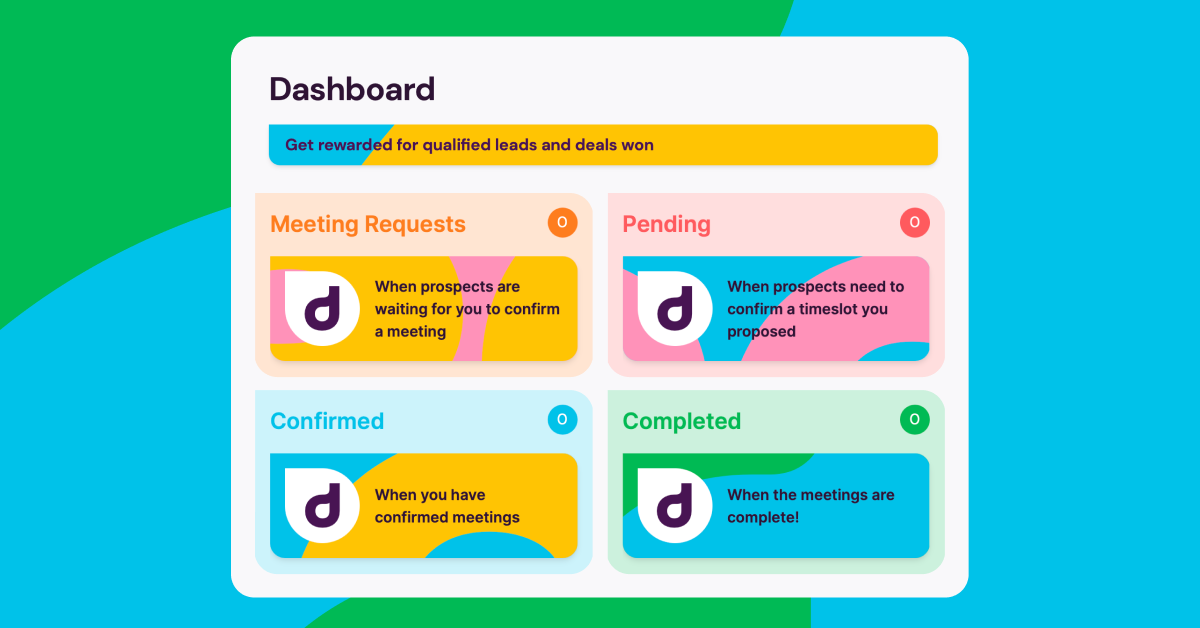
Tracking the right KPIs helps you connect feedback to action and measure whether your efforts are actually making a tangible impact.
Here are seven key metrics you’ll want to keep an eye on:
- Net Promoter Score (NPS): Measures how likely customers are to recommend your product or service to others on a scale from 1 to 10, on average. It’s a great proxy for loyalty and long-term satisfaction.
- Customer Satisfaction Score (CSAT): A direct measurement of how happy customers are after a specific interaction (usually on a scale from 1 to 5). It gives you quick, actionable feedback on specific touchpoints (e.g., post-support).
- Customer Effort Score (CES): Measures how easy it was for a customer to complete a task or resolve an issue. Lower effort correlates with higher satisfaction and loyalty.
- Feedback volume and response rates: High volume and engagement usually indicate your VoC program is well-tuned and that customers want to share their thoughts.
- Sentiment analysis scores: Sentiment trends help you track emotional shifts — whether users feel more confident, frustrated, engaged over time.
- Churn and retention rates: The percentage of customers who stop doing business with you vs. those who stay. If your retention improves as you implement VoC-driven changes, you’re on the right track.
- Product/service improvement rates: Internal tracking of issues resolved, features added, or experience upgrades directly linked to customer feedback (a.k.a. your VoC wins in action).
Developing your Voice of the Customer strategy
Your VoC strategy is where the rubber meets the road. To create a structured, repeatable process that ties customer feedback directly to business outcomes, there are five key steps to follow:
1. Align VoC with your business goals.
Start by identifying your core strategic objectives. Are you trying to break into a new market? Reduce churn? Improve onboarding?
Once you’ve nailed those down, Deeto simplifies feedback collection by allowing your customers to share it directly. When you invite them to the platform, they instantly become part of your knowledge base.
2. Prioritize customer feedback based on impact.
Not all feedback carries equal weight. Feedback from a high-LTV or long-time customer might reveal deeper loyalty drivers or critical gaps, especially if they're aligned with your ICP. Segment insights so you’re not optimizing for edge cases or low-impact voices.
Also pay close attention to patterns. If 20% of your customers flag the same issue, that’s probably a high-impact opportunity.
3. Turn feedback into actionable insights and recommendations.
Analyze the data to uncover trends, root causes, and opportunities. Group comments by themes (e.g. pricing, usability, support) and tie them back to your goals. Then create clear, specific recommendations your team can act on — for example, “redesign the signup flow to reduce confusion” instead of “people are getting stuck.”
4. Implement changes based on those insights.
Work with Product, Marketing, Support, and Ops teams to turn insights into roadmap items, experiments, or process improvements. Set timelines, assign ownership, and track progress for each.
Small changes (like updating onboarding emails) can be quick wins, while larger changes (like building a new feature) need more planning, but both matter.
5. Close the feedback loop.
In VoC, active listening also means you respond. You acknowledge the feedback, you act on it, then you let customers know you've implemented a solution. One way to do this is to send an email saying “You asked, we listened," highlighting what’s new and thanking them for their input.
With Deeto, knowing who is responsible for which feedback is easy because everything is tagged by name and segment. It also integrates with your CRM, so you can reach out directly to the customers who gave feedback without having to manually search for their contact information.
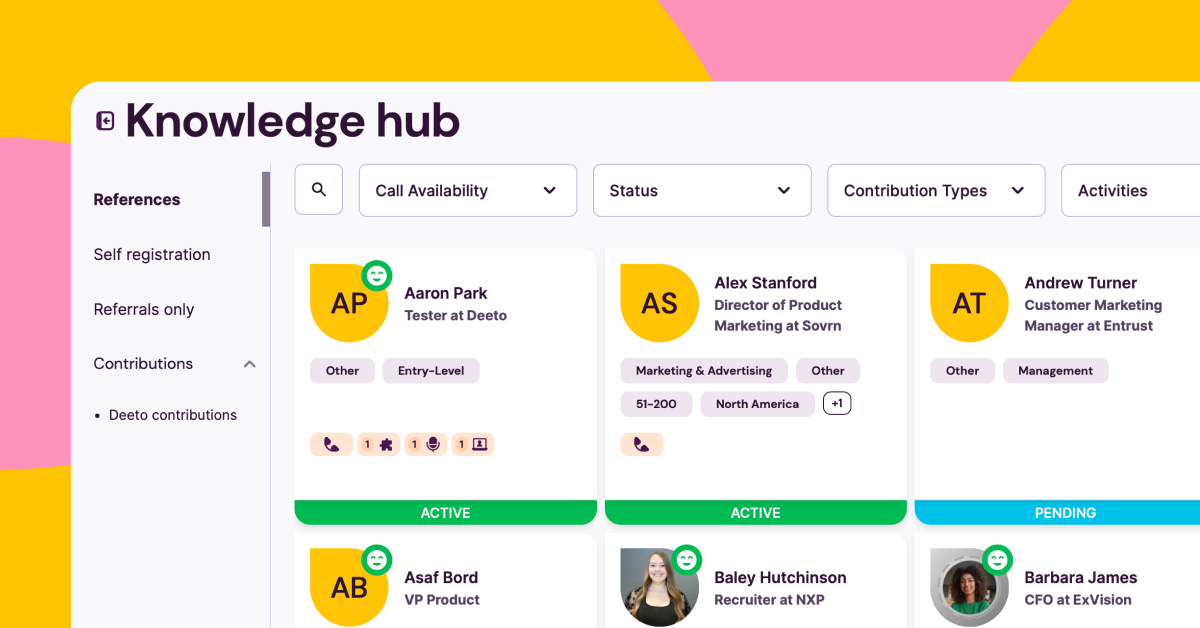
VoC is showing up in AI search, not just internal dashboards
Buyers used to ask a sales rep what other customers thought. Now they ask an LLM, and the LLM answers with whatever third-party proof it can find: reviews, forum threads, comparison pages, cited customer quotes.
That shifts what VoC needs to produce. A survey score that lives in an internal dashboard has zero visibility to an AI Overview or a Perplexity answer. A published customer story, a G2 review, a cited stat with a named source, all of that is extractable. The companies winning in AI search treat customer voice as public-facing proof, not just an internal feedback loop.
The problem isn't collecting customer feedback. The problem is connecting it to decisions, and increasingly, to the answers AI engines give your buyers before they ever talk to sales.
Voice of the Customer methods compared
Voice of the Customer best practices to maximize impact and efficiency
Timing, application, and analysis make the difference between “meh” insights and truly actionable ones. To implement the steps I've mentioned above, there are a few important best practices to keep in mind:
- Ask the right questions at the right time. Don't just ask what customers think, ask why, and trigger feedback at key touchpoints instead of waiting until the end of the journey.
- Watch what customers do, not just what they say. Abandoned carts, feature usage, churn points. Layer behavioral data with traditional feedback for a fuller picture.
- Keep a VoC backlog. Log feedback, prioritize it, and revisit it regularly instead of letting it pile up unreviewed.
- Build a feedback taxonomy. Tag feedback by type, pricing, UX, onboarding, support, so patterns are easy to spot and track over time.
- Use VoC insights to drive sales. Feed positive feedback into the sales cycle and build a customer advocacy program starting with your biggest promoters.
Common VoC challenges and solutions
Even with those best practices, you'll probably run into four main issues when you're implementing and scaling your VoC program:
- Low response rates
- Large volumes of unstructured data
- Feedback response times
- Personalization and targeting
Let's take a closer look at some possible solutions to these issues:
Dealing with low response rates
One of the biggest challenges for VoC programs is getting enough responses to make the data statistically significant.
Increase your response rates:
- Keep things short and focused (2–3 questions max for quick touchpoints).
- Use in-context surveys (like in-app prompts or post-purchase pop-ups).
- Offer a small incentive.
- Let people know their feedback actually leads to change.
A platform like Deeto makes things easier because customers leave their knowledge and insights directly within the app, and it's as easy as making an Instagram post.
Analyzing large volumes of unstructured data
Open-ended feedback, reviews, and support tickets pile up fast—and it’s hard to make sense of them manually.
The solution here is to use AI-powered text analytics or sentiment analysis tools, which can help you categorize, tag, and analyze the feedback at scale. Build a tagging system or feedback taxonomy to organize themes, then routinely extract the top 3–5 insights per channel to stay focused.
Acting on feedback quickly enough
When internal processes move slow, the insights customers give you lose momentum.
To fix this, assign VoC "owners" in each department who can triage and route feedback for particular categories. For instance, at-risk customers can be routed to Customer Success while major bug reports can go to your Product team.
Personalization and hyper-targeting using VoC data
Maybe you collect great insights but struggle to apply them to personalized marketing, onboarding, or product experiences.
If you tie VoC data to your CRM or customer profiles, you can use the feedback to build smart segments (e.g., “frustrated new users,” “loyal customers who want X feature”). From there, customize content, offers, or product flows based on that segmentation.
You can use Deeto's AI-powered segmentation tools to curate and suggest the most valuable content for each specific use case or customer interaction.
FAQs
What is Voice of the Customer (VoC)?
Voice of the Customer is the systematic process of collecting, analyzing, and acting on customer feedback and behavior across channels like surveys, reviews, support tickets, and interviews. It's proactive and ongoing, not a single survey or score.
What's the difference between Voice of the Customer and customer satisfaction?
Customer satisfaction measures a single moment, usually right after a purchase or support interaction, using metrics like CSAT or NPS. VoC is broader and ongoing. It gathers insight on behavior, pain points, and expectations from multiple sources over time to explain why customers feel the way they do.
What are the main methods for collecting VoC data?
The five core methods are surveys and questionnaires, interviews and focus groups, social media listening, customer reviews and ratings, and feedback from support channels. Strong programs combine several of these rather than relying on one.
What KPIs measure VoC program success?
The most common are NPS, CSAT, Customer Effort Score, feedback volume and response rate, sentiment trends, churn and retention rates, and the rate of product or service improvements traced back to customer feedback.
How does Voice of the Customer connect to AI search visibility?
Buyers increasingly ask AI tools like ChatGPT and Perplexity to compare vendors before talking to sales, and those tools cite third-party proof like reviews and customer stories. VoC programs that publish feedback publicly, not just internally, become source material those AI engines can find and cite.
How do I get started with a VoC program if I don't have one yet?
Start by setting one measurable goal (like reducing churn by X% or improving CSAT by 10 points), pick two or three collection methods that fit your customer base, and centralize the data in one place from day one so it doesn't end up scattered across tools before you've even started.
Deeto connects the Voice of the Customer to ongoing advocacy and retention efforts.
VoC isn't a program you run once a quarter. It's the system that should power your growth, retention, and go-to-market motion continuously.
Deeto helps teams collect, organize, and activate authentic customer voice, so the same feedback that improves your product also becomes proof your sales team can use and content your buyers find when they ask an AI engine for a recommendation. Customers choose how they want to contribute, whether that's a quick survey, a recorded interview, or a review, so you get input from a wider range of voices than a single feedback form ever could.
Request a demo to see how it works.
🎉 Save your spot
Register for the event
Once your spot is secured, we’ll send your confirmation details.
Subscribe to our newsletter
Subscribe to receive the latest blog posts to your inbox every week.
By subscribing, you agree to our Privacy Policy
Subscribe to our newsletter
Get the latest news and updates from our team.
By subscribing, you agree to our Privacy Policy
Related posts

Call Intelligence Software That Spots Your Next Reference

What is call intelligence software? Learn how it scores every call automatically and surfaces advocacy-ready customers.

4 Ways To Leverage Social Proof In Marketing
What is social proof in marketing? Learn 4 ways to use reviews, stories, and advocacy to build buyer trust.

How to Build a Customer Testimonial Strategy That Converts
What is a customer testimonial strategy? Learn how to collect, structure, and activate proof that closes deals.