What is Customer-Led Growth (CLG)? Benefits & Examples



Wednesday, March 18, 2026


What is Customer-Led Growth (CLG)? Benefits & Examples


View the podcast on Youtube

Customer-led growth (CLG) is a strategy that focuses on customer experiences, feedback, and advocacy to drive success. Instead of relying on aggressive sales tactics, customer-led growth uses customer insights to improve product development, engagement, and retention.
Companies that use customer-led growth benefit from organic word-of-mouth marketing, deeper customer connections, and improved brand credibility—all key ingredients for success.
In this article, we will explore the benefits of customer-led growth, key strategies, and how AI-powered tools, such as Deeto, can make you a customer-led business.
What is Customer-Led Growth?
Customer-led growth is a strategic approach that leverages customer insights and feedback to drive business success. This methodology putsthe customer at the center of all decisions, from product development tocustomer acquisition and advocacy.
CLG systems typically include structured feedback collection, customer advocacy programs, and a way to route customer insight back into product, marketing, and sales workflows. The goal isn't just collecting feedback. It's connecting that feedback to decisions fast enough for it to matter.
In contrast, product-led growth is driven by the product itself, often through experience with free trials or freemium models. There’s also sales-led growth, which is when revenue and customer acquisition is driven by a company's sales team through outreach and relationship building. While both product-led growth and sales-led growth can generate conversions and retention, they don’t contain the same trust element as customer-led growth. All in all, a customer growth strategy is an excellent way for your organization to grow.
Customer-Led Growth vs. Product-Led Growth vs. Sales-Led Growth
CLG is one of three dominant B2B growth models, and most companies actually run a blend of the three. Here's how they differ:
Why Customer-Led Growth Matters Now
Buyers no longer trust brand messaging by default, and that shift is measurable. In its 2021 Global Trust in Advertising study, Nielsen found that 88% of consumers trust recommendations from people they know more than any other marketing channel. That number holds in B2B: G2's 2022 Software Buyer Behavior Report found only 10% of buyers consider vendor-supplied content influential in their purchase decision.
The gap is only widening as AI reshapes how buyers research software. In April 2026, G2 reported that 51% of B2B software buyers now start their purchase research in an AI chatbot rather than a search engine, and review site citations are the top signal that makes buyers trust an AI chatbot's recommendation.
The takeaway for marketing and revenue teams: content written by your own brand carries less weight than it used to, and AI search tools are amplifying that shift rather than reversing it. Customer-led growth works because it hands buyers something an ad or a landing page can't: proof from someone with nothing to sell them.
The Benefits of Customer-Led Growth
1. Higher Retention Rates
When you understand and meet customer needs, satisfaction naturally follows. Happy customers often remain loyal, which reduces churn and creates long-term relationships.
To grow customer loyalty, you should offer personalized experiences, timely support, and ongoing engagement.
2. Stronger Customer Advocacy
Engaged and satisfied customers become powerful brand advocates. They willingly share their positive experiences with others and influence new prospects through word-of-mouth, online reviews, and social media.
In return, these customers can significantly impact your brand’s reputation and drive organic growth.
3. Enhanced Product Innovation
Customer-led growth thrives on continuous feedback loops. When refining or creating new products, listening to customer insights and understanding their pain points can provide invaluable knowledge.
As such, this customer-centric approach keeps you ahead of the curve, adapts to changing needs, and delivers innovative solutions for your target audience.
4. Increased Revenue
Growing customer loyalty and advocacy has a direct correlation with long-term profitability. That’s because loyal customers contribute to repeat sales and spend more over time.
In response, it creates a sustainable cycle where investment in customer relationships leads to a steady income.
5. Competitive Differentiation
In today's crowded markets, standing out is a challenge. However, you prioritize customer-led strategies to demonstrate your commitment to understanding and adapting to your customers’ needs.
This differentiates you from competitors focusing on traditional marketing tactics.
6. Lower Customer Acquisition Costs
Customer-led growth reduces heavy spending on traditional marketing and paid acquisition strategies. When happy customers spread the word through referrals, testimonials, and organic social media engagement, they attract new prospects at a fraction of the cost of paid ads.
Moreover, customers trust recommendations from peers far more than they do branded advertising.
7. Stronger Brand Trust
A company that visibly acts on customer feedback earns confidence that marketing copy alone can't buy. That trust shows up in renewal conversations, expansion deals, and every net-new deal a happy customer influences.
The Key Pillars of a Successful Customer-Led Growth Strategy
1. Customer Advocacy Programs
Structured customer advocacy programs turn satisfied customers into repeatable proof: testimonials, reviews, referrals, and case studies that do the selling for you. Without structure, advocacy stays scattered across whoever happens to say something nice on a call.
2. Community Building and Engagement
Forums, customer events, and peer groups give customers a reason to stay connected between purchases. Active communities also double as a live feedback channel, surfacing what customers care about in real time.
3. Personalized Customer Experiences
Modern customers expect personalized interactions that match their preferences, behaviors, and past interactions.
You can use AI-driven segmentation, behavioral tracking, and customized messaging to boost personalization. As a result, this creates meaningful connections, higher retention rates, and increased customer satisfaction.
4. Data-Driven Customer Insights
Utilizing customer data is essential for making informed business decisions. Advanced analytics provide data on customer behavior, pain points, and trends, which allows you to optimize your strategies.
5. Continuous Customer Feedback Loops
Establishing structured mechanisms for collecting and acting on customer feedback ensures that you meet customer expectations. You can use surveys, Net Promoter Score (NPS) tracking, product reviews, and in-app feedback channels to gain insights for continuous improvement.
How Deeto Helps
Deeto is built around this exact problem: turning scattered customer voice into a system your teams can actually use. Deeto's Listen module captures customer voice directly from interviews, reviews, and conversations. Analyze surfaces sentiment and patterns across that feedback. Activate delivers the right proof to the right person in their existing workflow, whether that's a sales rep in a deal or a marketer building a case study. Orchestration ties the loop together so customer references and advocacy programs scale without a manual chase for every new testimonial.
Implementing Customer-Led Growth: The Practical Steps
- Identifying Your Ideal Customer Profile: Understanding your most valuable customers allows for targeted engagement.
- Mapping the Customer Journey: Visualizing the customer experience helps identify pain points and opportunities for improvement.
- Creating Customer Feedback Channels: Implementing surveys, interviews, and review platforms facilitates continuous insights.
- Developing Customer Advocacy Initiatives: Incentivizing referrals and highlighting success stories strengthens brand credibility.
- Building a Customer-Centric Culture: Encouraging a company-wide mindset shift ensures every team prioritizes customer success.
How to Implement Customer-Led Growth: 5 Practical Steps
- Identify your ideal customer profile. You can't be customer-led if you don't know which customers matter most. Start with the accounts driving your best retention and expansion numbers.
- Map the customer journey. Walk through the experience from first touch to renewal and mark where customers get stuck or drop off.
- Build structured feedback channels. Surveys, interviews, and review platforms give you a consistent read on customer sentiment instead of anecdotes from whoever happened to complain loudest.
- Launch advocacy initiatives. Incentivize referrals, collect testimonials, and give customers an easy way to share results publicly.
- Build a customer-centric culture. CLG fails when it lives only in customer marketing. Product, sales, and customer success all need to treat customer insight as an input to their own decisions.
Key Performance Indicators (KPIs) for Customer-Led Growth (CLG)
Measuring the success of a customer-led growth strategy requires tracking key metrics that reflect customer engagement, satisfaction, and advocacy.
Here are some of the key metrics:
1. Customer Lifetime Value (CLTV)
CLTV measures the total revenue you can expect from a single customer throughout their relationship with the brand. A high CLTV indicates strong customer retention, repeat purchases, and long-term profitability.
With improvements in customer satisfaction, personalized experiences, and building loyalty, you can increase CLTV and maximize the return on customer acquisition investments.
2. Net Promoter Score (NPS)
NPS assesses customer loyalty and their likelihood to recommend a product or service to others. It’s measured through a simple survey question, such as:
"How likely are you to recommend our product/service to a friend or colleague?"
Respondents are classified as ‘Promoters, Passives, or Detractors’. A high NPS suggests strong customer advocacy, but a low score may indicate dissatisfaction or unmet expectations.
3. Customer Churn Rate
The churn rate tracks the percentage of customers who stop using a product or service. A rising churn rate signals potential issues with customer satisfaction, the onboarding process, or product value.
That said, if you analyze churn trends and implement proactive retention strategies—such as personalized outreach, loyalty programs, and enhanced customer support—you can reduce attrition and improve long-term retention.
4. Customer Advocacy Rate
The customer advocacy rate measures the percentage of customers actively referring and promoting the brand. This includes participation in referral programs, writing positive reviews, or sharing experiences on social media.
A high advocacy rate indicates strong brand loyalty and organic growth potential. You can enhance advocacy with strong relationships, rewarding referrals, and engaging with customers via community-building efforts.
5. Customer Satisfaction Scores (CSAT)
CSAT quantifies customer happiness based on surveys and feedback mechanisms. Typically measured through post-interaction surveys, CSAT helps you gauge immediate customer reactions to products, services, or support experiences.
A consistently high CSAT score reflects a positive customer experience. In contrast, lower scores may highlight areas needing improvement.
6. Customer Engagement Score (CES)
The Customer Engagement Score (CES) measures how actively and frequently customers interact with your brand, product, or service. You can track engagement through various metrics, such as login frequency, feature usage, content consumption, or time spent on the platform.
A high CES indicates that customers find value in your offerings and are more likely to stay loyal, make repeat purchases, and advocate for your brand.
Conversely, a low CES may signal a disengaged user base, potentially leading to higher churn rates.
Common Customer-Led Growth Challenges
1. Internal Resistance to Change
Shifting to CLG means product, sales, and customer success all treat customer insight as a shared input, not just a customer success responsibility. That requires leadership to align departments around the same customer-facing goals and give teams the training to act on insight instead of just collecting it.
2. Scattered Customer Data
Most companies collect customer feedback in five different tools that never talk to each other. Centralizing that data, and applying predictive analytics to spot patterns like churn risk early, is what turns scattered feedback into something teams can act on.
3. Scaling Advocacy Without Losing Authenticity
As advocacy programs grow, it gets harder to keep outreach personal. Automating the repetitive parts, referral tracking, review requests, follow-up, while keeping the ask itself specific to that customer's actual experience, is what keeps a program from feeling like spam at scale.
4. Advocate Fatigue
Featuring the same case study for months makes your proof feel stale to prospects who've seen it before. Rotate advocates and vary industries, use cases, and outcomes so prospects keep seeing fresh, relevant proof instead of the same three logos on repeat.
Examples of Customer-Led Companies
Several platforms have successfully implemented customer-led growth (CLG) strategies. These have helped businesses harness customer advocacy, engagement, and data-driven insights to drive sustainable growth.
Here are some examples:
Deeto
Deeto's customer orchestration platform centralizes customer feedback, references, and advocacy so marketing, sales, and product teams work from the same source of customer truth instead of scattered spreadsheets and Slack threads. Deeto also runs its own CLG motion internally, connecting prospects in active deals with relevant customer references and pulling customers directly into content and product decisions.
Influitive
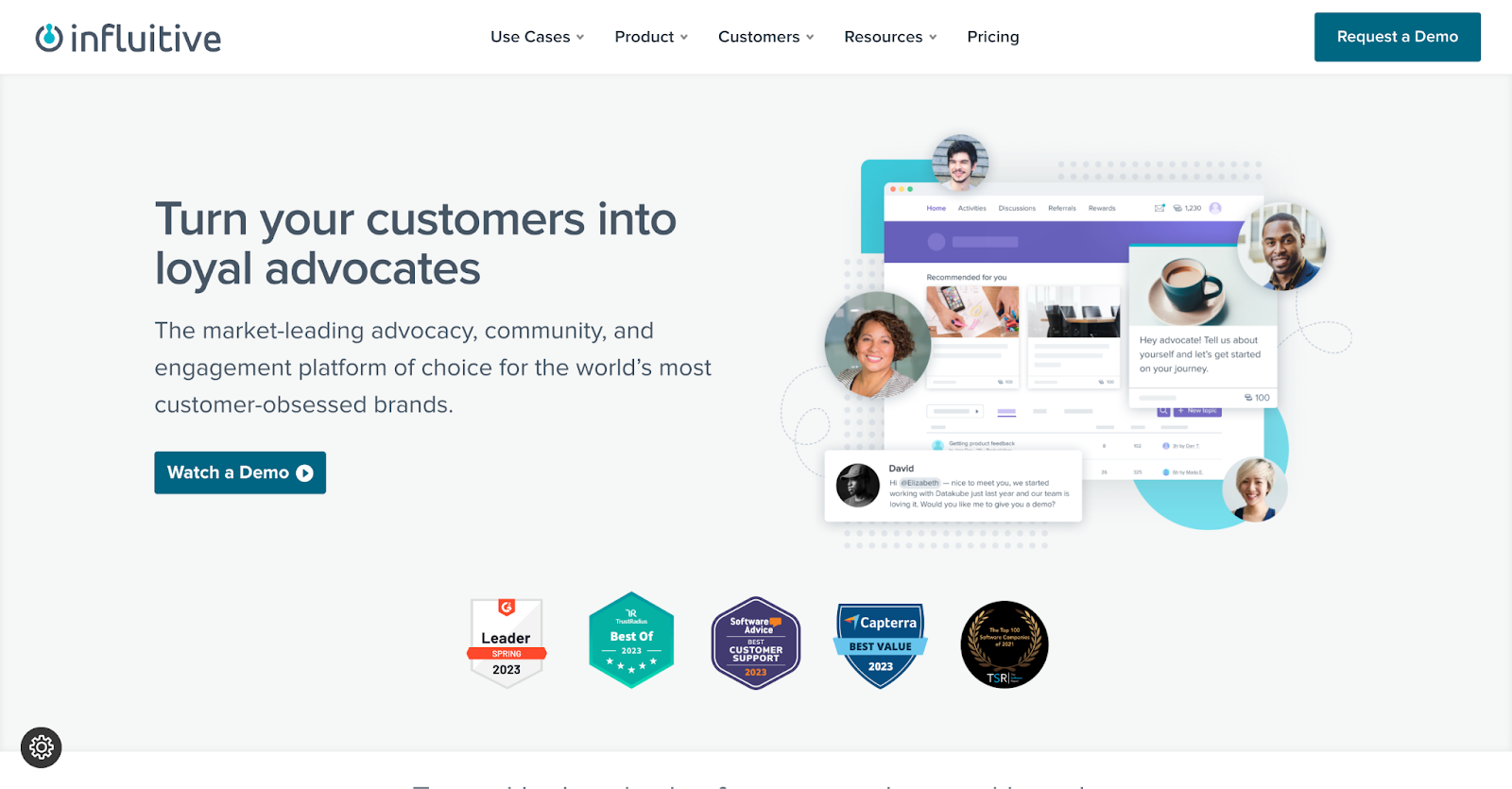
Influitive focuses on customer advocacy and community, helping companies incentivize referrals and organize engaged customers into structured advocacy programs.
Gainsight
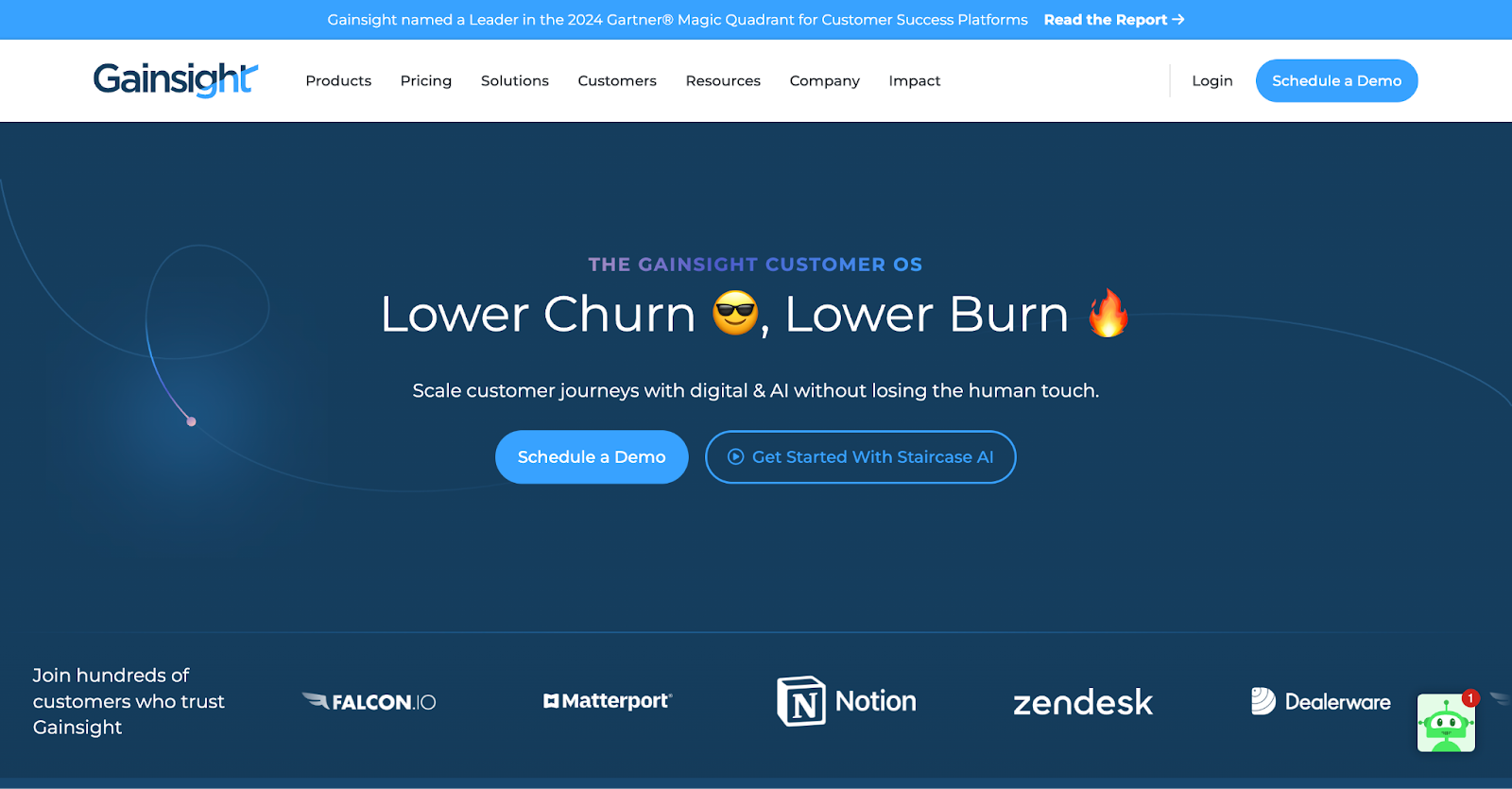
Gainsight centers on customer success management, giving teams the tools to track health scores, reduce churn, and act on retention risk before it becomes a lost account.
Final Thoughts
Customer-led growth is the future of sustainable business success. If you prioritize customer insights, engagement, and advocacy, you will build loyal communities, drive organic growth, and stay ahead of the competition.
Deeto provides the AI-driven edge to implement and scale customer-led growth strategies effectively. Book a demo and see how it works.
FAQs
What is customer-led growth in simple terms?
Customer-led growth is a strategy where a company's growth comes primarily from customer insight, feedback, and advocacy rather than outbound sales or paid marketing. Product decisions, positioning, and go-to-market motions are all shaped by what customers actually say and do.
How is customer-led growth different from customer-centric marketing?
Customer-centric marketing focuses specifically on messaging and campaigns built around customer needs. Customer-led growth is broader. It applies customer insight to product, sales, and customer success decisions, not just marketing.
Can customer-led growth work alongside product-led or sales-led growth?
Yes. Most B2B companies blend all three. A common pattern is product-led acquisition, sales-led closing on larger deals, and customer-led expansion and retention once a customer is live.
What's the first step to becoming a customer-led company?
Start by identifying your ideal customer profile and mapping their journey to find where feedback already exists but isn't being used. Most companies have more customer insight than they realize. It's just scattered across support tickets, calls, and reviews instead of connected to decisions.
What metrics prove customer-led growth is working?
Customer lifetime value, net promoter score, churn rate, and customer advocacy rate are the core metrics. A rising advocacy rate combined with falling churn is usually the clearest sign a CLG strategy is compounding.
🎉 Save your spot
Register for the event
Once your spot is secured, we’ll send your confirmation details.
Subscribe to our newsletter
Subscribe to receive the latest blog posts to your inbox every week.
By subscribing, you agree to our Privacy Policy
Subscribe to our newsletter
Get the latest news and updates from our team.
By subscribing, you agree to our Privacy Policy
Related posts

Call Intelligence Software That Spots Your Next Reference

What is call intelligence software? Learn how it scores every call automatically and surfaces advocacy-ready customers.

4 Ways To Leverage Social Proof In Marketing
What is social proof in marketing? Learn 4 ways to use reviews, stories, and advocacy to build buyer trust.

How to Build a Customer Testimonial Strategy That Converts
What is a customer testimonial strategy? Learn how to collect, structure, and activate proof that closes deals.