How to Shorten Your Sales Cycle: 13 Strategies



Wednesday, March 4, 2026


How to Shorten Your Sales Cycle: 13 Strategies


View the podcast on Youtube

B2B sales are naturally more drawn out than their B2C counterparts. There are more stakeholders, higher price tags, and more risk involved. That's just part of the game.
But there's a difference between "long" and too long.
To reduce your sales cycle, you need to remove friction at every stage: qualify leads faster, personalize outreach, automate manual work, and give buyers the proof they need to decide without waiting on you. Buyers don't just dislike friction, they actively avoid it. Nothing kills momentum faster than a drawn-out sales process full of follow-ups, delays, and unclear next steps.
In today's article, I'll walk you through 13 strategies you can use to shorten your sales cycle and get deals across the finish line faster.
Why shortening your sales cycle is crucial
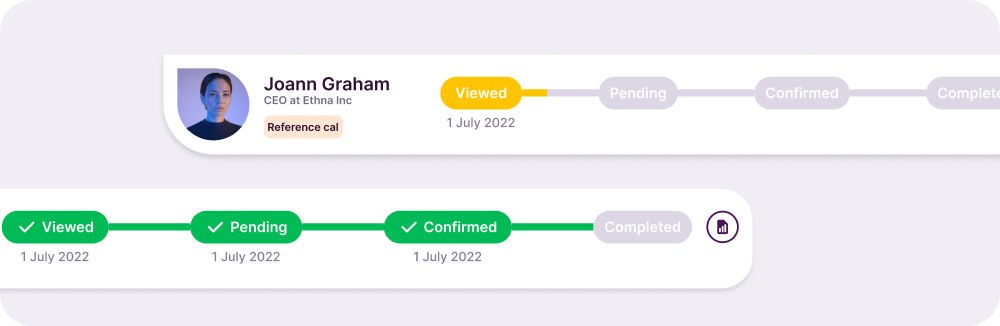
The faster you can educate your buyer, align with their needs, and get to a decision, the more likely you are to win the deal. According to Ebsta's 2023 B2B Sales Benchmark Report, deals that close within 31–60 days have significantly higher win rates. And when a deal remains open beyond twice the average sales cycle length, the chance of closing drops to just 3%.
Sales cycles have actually started to reverse course. 6sense's 2025 B2B Buyer Experience Report found the average B2B buying cycle dropped from 11.3 months in 2024 to 10.1 months in 2025, as buyers make first contact with sellers earlier in their journey. That's a real opportunity. Companies that remove friction from their own process compound that shift instead of falling behind it.
A shorter sales cycle has ripple effects across your entire business. It leads to:
- Greater sales capacity
- Higher revenue velocity
- A better buyer experience
- Lower customer acquisition cost
- Better forecasting and pipeline visibility
- More conversions (at every funnel stage)
- Stronger alignment between sales and marketing
You can fit more deals into the pipeline at once, with better margins and more predictable cash flow, while making it more seamless for buyers to actually give you their money.
The problem is that sales cycles are getting more complicated. Capchase's 2023 report indicates that B2B SaaS sales cycles have lengthened by an average of 3.8 weeks across companies, which leads to increased customer acquisition costs and reduced revenue per unit.
Defining your sales cycle: know your starting point

Before you can speed up your sales cycle, you need to understand where it actually begins, how it progresses, and where it tends to stall.
1. Map out your current sales stages.
In B2B sales, you have multiple conversion points.
- A prospect becomes an MQL.
- Then an SQL.
- Then an opportunity.
- Then (hopefully) a closed-won deal.
Each of those transitions is a handoff, and each handoff is a potential slowdown.
Start by documenting the full journey from first touch to closed deal. Break it into clear stages—lead capture, qualification, demo, proposal, negotiation, close—and identify the key actions or signals that move a prospect forward.
2. Measure the time between each step.
Once you’ve outlined each stage of your sales cycle, dig into the data and measure how long leads typically spend in each one. You’re looking for averages, outliers, and patterns.
- How long does it take to convert an MQL to an SQL?
- How much time passes between a discovery call and a proposal?
- Are deals stalling during legal review or procurement?
With answers to these questions, you can zoom in on the slowest stages and fix what’s broken — e.g., a content gap, poor qualification, or an unclear next step.
3. Identify friction points and blockers.
Now, you have a benchmark. So you can ask yourself why certain stages take longer than they should. This is where the real optimization work begins.
Look at:
- Handoffs between teams: Is there lag between marketing and sales? Between sales and legal?
- Buyer indecision: Are prospects unclear on next steps? Are they waiting on internal approvals?
- Internal delays: Are reps waiting on custom decks, pricing approval, or legal redlines?
- Tech gaps: Are tools misaligned or slowing down outreach, quoting, or scheduling?
Talk to your sales team. Listen to recorded calls. Review proposal feedback.
Once you've figured out exactly where in the sales cycle you're taking too much time, you can start applying targeted fixes that actually move the needle. Below are 10 strategies you can use to do so.
Strategy 1: Qualify ruthlessly, disqualify quickly.
If you're facing problems further down the funnel with leads who were never going to close, eliminating them at the source (the top of the funnel) will save you time and give you resources back in every stage thereafter. That's why bringing the right leads in is one of the most impactful improvements you can make: it gives back wasted time to every subsequent stage.
Define and adhere to your ICP.
Your ideal customer profile (ICP) should define the company size, industry, pain points, and buying triggers that make someone a strong fit for your solution. If a lead doesn’t check enough of those boxes, they’re not worth the time investment.
Implement a robust qualification framework
Don’t leave qualification to gut instinct. Your sales playbook should use proven frameworks like:
- BANT (Budget, Authority, Need, Timing)
- MEDDIC (Metrics, Economic buyer, Decision criteria, Decision process, Identify pain, Champion)
- CHAMP (Challenges, Authority, Money, Prioritization)
- Challenger Sale (commercial teaching, tailored messaging, differentiation)
The right methodology depends on how complicated your buying process is, and how many people are involved in the average buying group. Enterprise deals do better with a more involved framework like MEDDIC, for example.
Strategy 2: Master the discovery process.

A weak discovery call leads to vague proposals, unclear value, and deals that stall. If you want to shorten your sales cycle, you need to nail discovery because that’s where momentum begins.
Ask deeper, more insightful questions.
Don’t stop at surface-level pain points. Go deeper.
Instead of asking“What’s your biggest challenge?” ask:
- "How is that challenge impacting revenue or retention?”
- “What happens if you don’t fix this in the next quarter?”
- “What does success look like on the other side of this?”
Your sales reps' goal isn’t just to collect information. It’s to create urgency, build trust, and show the buyer you understand their world better than your competitors do (your chosen methodology will guide this).
Uncover real business challenges and desired outcomes.
Buyers don't care about fancy features. They care about what those features can do for their businesses. Maybe they want to reduce churn by 15%, enter a new market, or eliminate some of their manual workloads. When you connect your solution directly to those business-level goals, you make a more compelling case for your product, which drives faster decision-making.
Strategy 3: Personalize every interaction.
77% of B2B buyers are more likely to engage with sellers who show they understand their needs through personalization. And personalization is shockingly uncommon. Check your email inbox, look at all the pitches you get, and you'll see what I mean.
Tailor your messaging, demos, and content.
The best way to differentiate is through solution selling. The problems your reps uncovered in the qualification stage? Those are the things all the future conversations, demos, and enablement content should be centered around.
Deeto helps you personalize even further, even easier. Our smart-matching algorithm automatically shows your reps relevant references, use cases, and social proof collateral with each prospect, based on identifiers like their industry and company size.
Leverage research and insights.
It also helps to spend 5–10 minutes researching the company and the contact before each interaction. Look at recent press, LinkedIn activity, tech stack, and hiring trends. Then use that intel to ask smarter questions and position your solution more strategically. At the very least, it'll show them you've done your homework.
Strategy 4: Leverage Sales Automation to Speed Up Processes
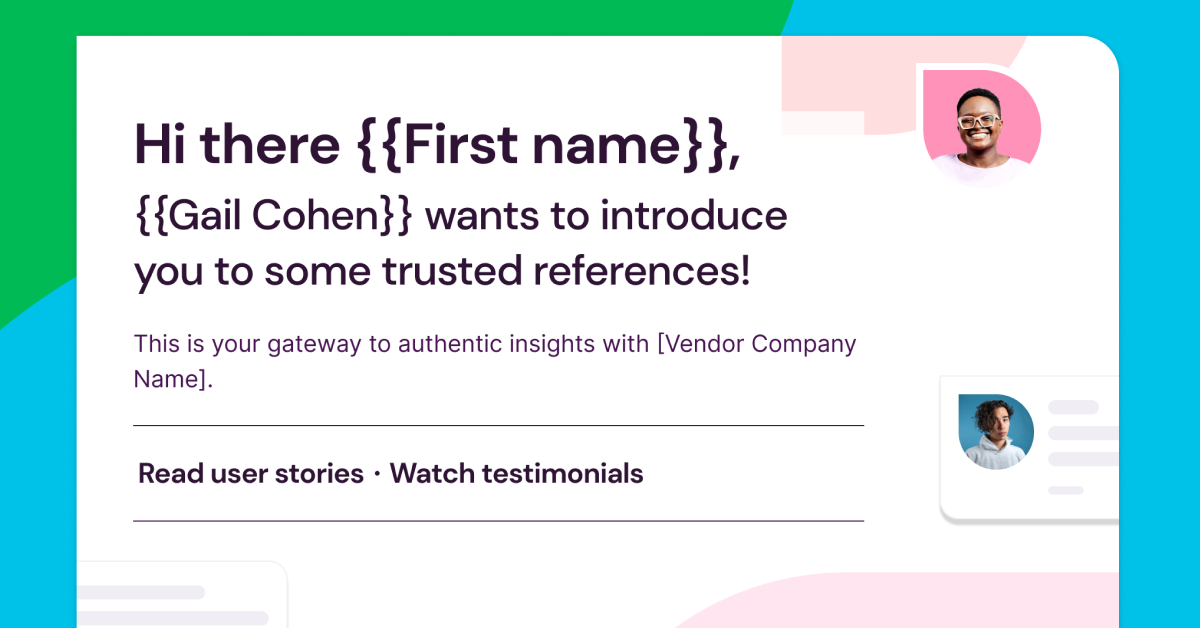
AI and automation tools can actually make you MORE authentic — that is, if you use them properly. A few critical ones:
- CRM automation (HubSpot, Salesforce): Tracks every touchpoint, updates deal stages automatically, and eliminates manual data entry.
- Email sequencing tools (Outreach, Reply.io): Automates personalized outreach and follow-up, so you're top-of-mind without constantly replying to dozens of people.
- Scheduling tools (Calendly, Chili Piper): Completely eliminates the "what time works for you?" aspect of setting meetings. Just drop a link and let prospects book.
- Proposal and contract automation (DealHub, DocuSign): Generate, send, and track proposals with built-in quoting and e-signature flows.
- Lead enrichment platforms (Clearbit, ZoomInfo): Auto-fill contact and company data to cut down research time.
Deeto plugs into your existing sales automation stack to amplify its time-saving benefits. By integrating with your CRM and sequencing tools, it streamlines social proof and reference sharing by automatically surfacing real customer stories that match your prospect’s profile.
Strategy 5: Leverage social proof powerfully.
There are plenty of ways to drive conversions using social proof (it influences 90% of buyers comparing products). The key is to use the right types of social proof. If your marketing attracts the wrong leads, you'll waste too much time qualifying people who were never going to buy.
That means featuring:
- Companies in the same industry
- Similar use cases
- Matching titles and roles
- Shared pain points and goals
If a SaaS CFO lands on your site and sees a testimonial from another SaaS CFO explaining how they eliminated 90% of their financial reporting inaccuracies, you’ve got instant relevance.
Deeto's AI-powered widget makes it easy to distribute social proof across your website, and there are plenty of other places to incorporate this content into your sales cycle:
- Add logos and quotes to landing pages and pricing pages.
- Include relevant case studies in email sequences.
- Bring tailored proof into your sales calls and proposals.
- Run ads with quotes and customer stories as the focal point.
Strategy 6: Handle objections proactively.
When buyers hesitate, it usually isn’t because they actually need more time. It’s because something feels unclear, risky, or misaligned.
You already know what objections come up most often:
- “It’s too expensive.”
- “We’re not ready to switch right now.”
- “We need buy-in from [insert stakeholder].”
- “We’ve tried something similar and it didn’t work.”
Bring these up before your buyer does. Frame them in the context of other customers who felt the same way, and explain how they moved forward anyway.
To make this the standard across your sales org, create a centralized objection-handling library your reps can pull from. And make it a part of your ongoing training to practice handling these objections in mock sales calls.
Strategy 7: Foster tight internal alignment.
Influ2 data shows that more than half (53%) of teams have issues with hand-off misalignment between sales and marketing. But you also have approvals from legal and finance (and, for enterprise deals, possibly your product team) to worry about.
There are a few steps you can take to eliminate those issues:
- Co-create the ICP and qualification criteria. Sales knows which leads convert and which ones waste time, which is critical intel for your marketers.
- Align on messaging and timing. For example, marketing should plant key objections early through content. Sales should reinforce messaging in discovery and demos. CS or onboarding should be looped in during late-stage deals if implementation is a concern.
- Use shared tools and workflows. Use shared dashboards in your CRM to track pipeline stages, lead status, and next steps. Automate internal alerts and routing for deal stage changes, task assignments, or reference needs. Again, Deeto helps with this.
- Create a tight feedback loop. Micro-feedback moments compound into better campaigns, stronger positioning, and faster closes. So you should always be sharing win reasons and sending voice notes or Loom videos to your marketing or CS counterpart after key calls.
Strategy 8: Streamline proposals and contracts.
If your proposals are confusing, overly technical, or missing key details, you’ll create hesitation, even if everything you've done up to this point has been executed perfectly.
Create clear, concise, value-driven proposals.
Your proposal should feel like a no-brainer to the buyer.
That means:
- Recapping their specific challenges
- Framing your solution as the answer
- Highlighting outcomes, not just features
- Keeping pricing simple and transparent
- Including relevant social proof or references
Use templates, but tailor them. And deliver them fast, ideally within 24 hours.
Bonus tip: Include a short video walkthrough of the proposal to give context and increase engagement.
Simplify legal and procurement steps wherever possible.
This is a huge drag point, especially in enterprise sales. But you can speed it up by using standard contracts that legal has already pre-approved and building optionality into pricing and terms to reduce back-and-forth.
You can also offer redline templates to guide negotiations through your contracting and e-signature tool, which further reduces the overall friction here.
Strategy 9: Use data analytics to identify bottlenecks
Dig into your CRM and analytics platforms to uncover:
- Stage duration trends: Where do leads linger the longest?
- Drop-off points: Which stages have the highest abandonment rates?
- Conversion rates by persona or segment: Are certain types of buyers consistently slower to close?
- Rep performance patterns: Is one team member consistently closing deals faster/slower than the others? What're they doing right/wrong?
Deeto surfaces valuable insights into engagement with reference content, buyer-to-buyer storytelling, and customer quotes, which tell you which proof points drive the most velocity and which customer stories resonate with which segments. That gives you a data-backed understanding of how trust accelerates deals.
Strategy 10: Leverage customer advocacy to build trust and shorten the sales cycle.
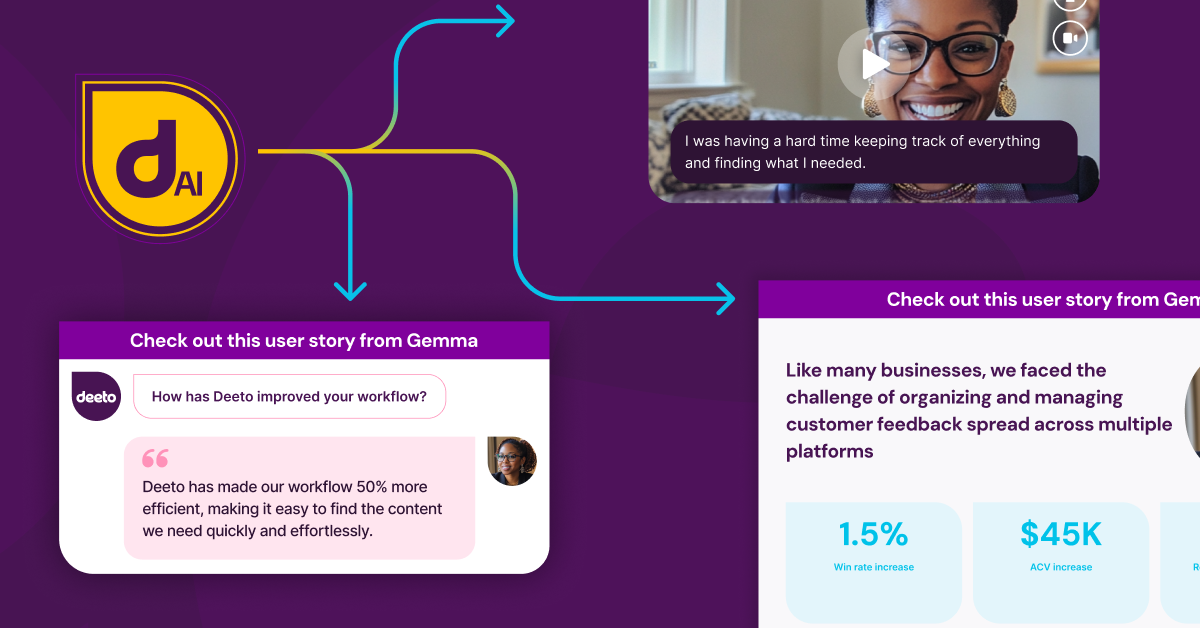
Nothing brings buyers to a "Yes" faster than hearing from someone who’s already been in their shoes and came out the other side with results. That’s the power of advocacy. It’s word-of-mouth marketing that’s both free and incredibly persuasive.
When you're building your customer advocacy program, don't leave out any of the following steps:
- Overcoming objections with case studies and testimonials
- Encouraging user-generated content and reviews (e.g., through small incentives)
- Building a structured referral program that rewards customers for making warm intros
Strategy 11: Use AI to respond to buyers in real time.
Buyers don't wait anymore. If a prospect has a question at 9 PM on a Tuesday and doesn't get an answer until Thursday's follow-up call, they've likely moved on to a competitor, or worse, gone quiet.
AI-powered chat tools can now handle first-line buyer questions instantly, whether that's pricing logic, integration details, or pointing someone to the right case study. This doesn't replace your reps. It removes the dead time between "I have a question" and "someone answered it," which is often where deals quietly stall.
The teams seeing the biggest impact aren't the ones automating everything. They're the ones automating the waiting.
Strategy 12: Give buyers a self-serve way to explore your product.
Scheduling a demo, waiting for a callback, then waiting again for a follow-up demo is a lot of friction for someone who just wants to see if your product fits. Interactive, self-guided product experiences let buyers explore relevant workflows on their own time, without waiting on your calendar.
This matters most early in the cycle, when a prospect is still forming their shortlist and isn't ready to commit to a 45-minute call. Give them a lightweight way to self-qualify, and you'll spend your live demo time with people who are already leaning in.
Strategy 13: Centralize the deal in one shared space.
Long sales cycles often come down to buyers juggling scattered emails, PDFs, and Slack threads with no single source of truth. A shared, buyer-facing space (sometimes called a digital sales room or deal room) that houses your proposal, pricing, relevant case studies, and next steps keeps everyone aligned and removes the "wait, can you resend that?" delays that stretch out negotiation.
Deeto plugs directly into this kind of workflow. Instead of a generic deck, reps can drop in smart-matched customer references and stories tailored to that specific buyer's industry and use case, so the shared space does double duty: it's both the deal hub and the proof point.
Deeto makes advocacy easy and scalable.
Deeto pulls all of your advocacy efforts into one place and simplifies them, so you’re not looking through thousands of content pieces, scrambling for references, or spending months to create one case study.
- Customers onboard themselves in minutes (it’s as easy as posting an Instagram story).
- You get a centralized library of quotes, stories, videos, and references.
- Sales reps can easily match prospects with proof that speaks directly to their concerns.
- You get to see which advocacy assets are actively influencing deals and accelerating close rates.
Request a demo to see how it works.
Frequently Asked Questions
How do you reduce a sales cycle?
Start by mapping your current sales stages and measuring how long deals sit in each one. Then fix the biggest friction points first, typically slow qualification, weak discovery, and manual handoffs between teams. Automation, personalization, and social proof (like customer references) all shorten the time between "interested" and "decided."
How do you shorten a sales cycle?
Shortening a sales cycle means removing unnecessary delays without rushing the buyer. The highest-impact levers are ruthless lead qualification, faster proposal turnaround, proactive objection handling, and giving buyers trusted proof (case studies, references, reviews) so they don't have to seek it out themselves.
What is a good sales cycle length?
It depends on deal size and complexity. SMB SaaS deals often close in 14 to 45 days, mid-market in 30 to 90 days, and enterprise deals can run 90 to 180+ days or longer. The more useful benchmark is your own average: track it, then work to bring it down without sacrificing win rate.
Why do sales cycles get longer?
Sales cycles stretch when buying committees grow, budget scrutiny increases, or reps spend time on unqualified leads. According to 6sense's 2025 research, buyers are now engaging sellers earlier in their journey, which gives sales teams more opportunity to influence the deal if they can respond quickly and provide the proof buyers need.
Can customer advocacy actually shorten a sales cycle?
Yes. Buyers trust peer validation more than vendor claims. When a prospect hears directly from a similar customer who solved a similar problem, it resolves doubt faster than another round of internal pitching. That's why reference calls and customer stories tend to compress the negotiation and objection-handling stages specifically.
🎉 Save your spot
Register for the event
Once your spot is secured, we’ll send your confirmation details.
Subscribe to our newsletter
Subscribe to receive the latest blog posts to your inbox every week.
By subscribing, you agree to our Privacy Policy
Subscribe to our newsletter
Get the latest news and updates from our team.
By subscribing, you agree to our Privacy Policy
Related posts

Call Intelligence Software That Spots Your Next Reference

What is call intelligence software? Learn how it scores every call automatically and surfaces advocacy-ready customers.

4 Ways To Leverage Social Proof In Marketing
What is social proof in marketing? Learn 4 ways to use reviews, stories, and advocacy to build buyer trust.

How to Build a Customer Testimonial Strategy That Converts
What is a customer testimonial strategy? Learn how to collect, structure, and activate proof that closes deals.